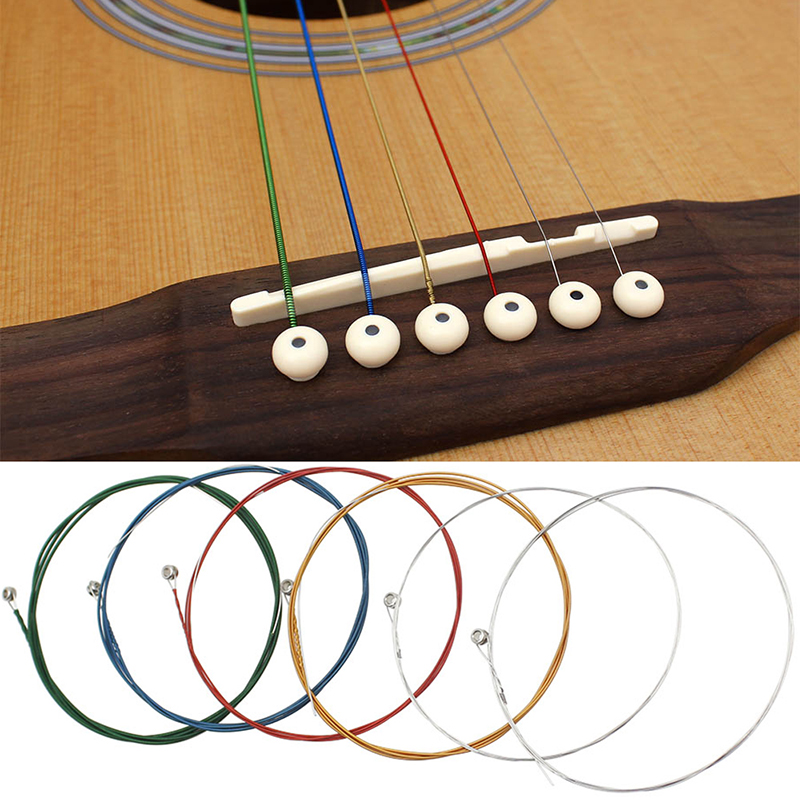
The world of acoustic strings for guitar is vast and complex, requiring a deep understanding to make the string choice most suitable for your style and instrument. Strings are the key elements of your guitar that create the resonance and vibrations essential for producing sound. They play a crucial role in the tone, durability, and playing comfort of your guitar. That’s why it’s essential to understand the different types of strings available, their characteristics, and how they affect the sound produced by your guitar.
Understanding the importance of acoustic guitar strings
Each guitar has a unique voice, shaped by its strings. The acoustic strings have a great influence on the tone and tuning of your guitar. Their string tension and string thickness determine the ease of playing and the projection of sound. For example, Extra light strings will be easier to play but will have a softer tone, while Heavy strings will produce a louder and fuller sound, but will require more force to play. Strings can be changed by the musician themselves or by a professional luthier during a string change.
The different types of acoustic guitars and their strings
There are several types of acoustic guitars, each requiring a specific type of string. For example, a Folk Guitar typically uses phosphor steel or stainless steel strings with a bronze coatingclassic Nylon strings for a softer and rounder sound. Brands such as Ernie Ball, D’Addario, Martin, Elixir, Golden Fleece, GHS, Fender, Gibson, Rotosound, Dunlop offer different types of strings to meet all the needs and preferences of guitarists.
The different types of acoustic guitar strings
The acoustic guitar, whether it’s the folk guitar or the classical guitar, uses a variety of strings, each offering a unique sound. These strings are usually made from materials such as phosphor steel, stainless steel, or nylon. The choice of strings can significantly influence the tone and resonance of the instrument, making this choice crucial for any musician.
Nylon strings vs steel strings
Classic nylon strings are often associated with the classical guitar, offering a soft sound and lower string tension, making playing more comfortable for the fingers. On the other hand, phosphor steel or stainless steel strings are commonly used for the folk guitar. They produce a brighter and louder sound, with greater resonance. The choice between these two types of strings largely depends on the style of music you want to play.
Roundwound strings are the most common and are appreciated for their bright tone and ability to produce a wide range of sounds. Flatwound strings, on the other hand, have a smooth surface that offers a softer playing feel and a warmer tone, ideal for jazz and acoustic blues. Halfwound strings offer a compromise between the two, with a bright sound and a soft playing feel. The choice between these types of strings will depend on your playing style and personal preferences.
How to change the strings of your acoustic guitar
The string change of an acoustic guitar is an important step for any guitarist, whether it’s a folk guitar or a classical nylon guitar. Indeed, the sound quality and durability of the instrument largely depend on the maintenance of its strings. Whether you are a fan of Ernie Ball, D’Addario, Martin or Elixir strings, or you prefer lesser-known brands like Golden Fleece, GHS, Fender, Gibson, Rotosound or Dunlop, this buying guide will help you understand how and when to change the strings of your acoustic guitar.
When and why to change the strings of your guitar
sound of the instrument. Moreover, the accumulation of dirt and oil can cause corrosion that reduces the lifespan of the strings. Therefore, it is recommended to change the strings of your guitar every two to three months, or as soon as you notice a decrease in sound quality. This is also the ideal time to check the entire instrument, especially the neck, the bridge, and the tuning mechanism.
Step-by-step guide to changing the strings of your acoustic guitar
Start by loosening the strings using the tuning mechanism, then gently remove them. Clean the neck and bridge to remove residues. Then, mount the new strings making sure to respect the correct string tension: extra light, light, medium or heavy. Tune the guitar using a tablature or a tuning fork. Remember that string assembly, like guitar tuning, may require the help of a luthier if you are a beginner or if you are not comfortable with these operations.
Tips for maintaining acoustic guitar strings
The acoustic stringsErnie Ball, D’Addario, Martin, Elixir, Golden Fleece, GHS, Fender, Gibson, Rotosound, and Dunlop. However, no matter the quality of your strings, good durability cannot be achieved without proper maintenance. This includes regular cleaning to avoid corrosion, as well as changing strings at an appropriate rate.
Maintaining the quality of your strings with good maintenance
Good maintenance of acoustic guitar strings begins with regular cleaning. Strings can accumulate dirt and grease from your fingers, which can affect resonance and vibrations, and therefore the sound. It is recommended to use a soft cloth to clean the strings after each playing session. In addition, regular changing of the strings is essential to maintain good sound. The frequency of change depends on your playing style and how often you play, but in general, strings should be changed every three months or after 100 hours of play.
Mistakes to avoid so as not to damage your strings
There are some common mistakes that guitarists make that can damage their strings. One of the most common is not changing them often enough. Playing with worn strings can not only affect the sound, but also potentially damage the neck of your guitar.It is also important to ensure that the strings are correctly mounted and tuned. Incorrect mounting can cause excessive tension on the strings and the bridge, which can lead to their breaking. Furthermore, the use of a pick that is too hard or a playing technique that is too aggressive can also damage the strings.
Subscribe to Our Newsletter and Get 5% Off Your First Order!*
* Excludes ongoing sales.
By signing up, you will receive your 5% discount code by email. You can unsubscribe at any time. See our privacy and cookie policy for more information.