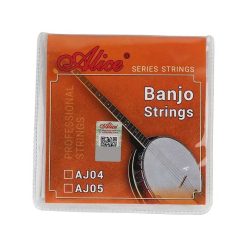
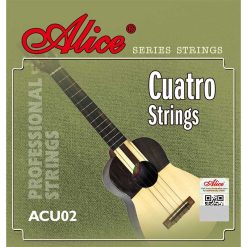
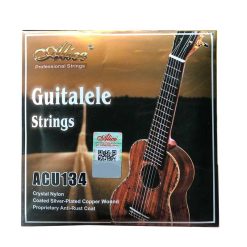
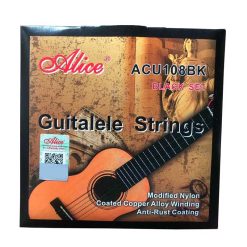
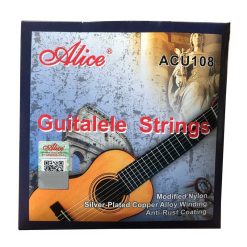
9,99€
This product has multiple variants. The options may be chosen on the product page
Understanding the Different Types of Ukulele Strings
The choice of ukulele strings plays a crucial role in the sound and use of your instrument. There are several types to consider, each with its own characteristics. The material of the strings, the tension, and the brand are all variables that can affect the sound, user experience, and lifespan of your strings. Notable brands include Aquila , D’Addario , GHS , Martin Ukulele , Savarez , Ernie Ball , and La Bella .
Nylon Strings
The nylon strings , like those in the Aquila Nylgut or Nylon Noir range, are among the most popular for the ukulele. They are appreciated for their warm sound and their softness to the touch. They are often used on soprano and concert ukuleles. Their tension is generally lower, which makes them more comfortable to play for beginners. However, they may require more frequent tuning, hence the usefulness of a tuner .
Fluorocarbon strings
The fluorocarbon strings are another popular option. They are generally brighter and clearer than nylon strings. They are also more durable and maintain their tuning better. Fluorocarbon strings are often used on tenor and baritone ukuleles, although they can also be used on soprano and concert ukuleles. The D’Addario strings and Savarez are examples of quality fluorocarbon strings.
Metal strings
Finally, metal strings , such as GHS strings or Ernie Ball , are generally used on electric ukuleles or baritone ukuleles. They offer a brighter sound and are more durable. However, they can be more demanding on the fingers. It is important to note that the choice between nylon, fluorocarbon, or metal strings will primarily depend on your music style, your playing level, and your instrument.
Choosing the Right Strings for Your Ukulele
The choice of strings for your ukulele can greatly influence the quality of your sound, so it is essential to choose them well. Many brands are available, including the popular Aquila and D’Addario . Aquila ukulele strings are appreciated for their warm sound and durability. D’Addario strings are also an excellent option, offering a rich sound and a wide variety of materials, including nylon and fluorocarbon.
Strings Suitable for Different Types of Ukuleles
There are different types of ukuleles, including the soprano, concert, tenor, and baritone ukuleles, and each requires specific strings. Nylon strings are commonly used for the soprano ukulele, offering a soft sound and moderate string tension. For a concert or tenor ukulele, fluorocarbon strings are often recommended, as they provide a brighter sound and higher tension. Finally, baritone ukuleles typically use steel strings , for a sound closer to that of the guitar.
Factors to consider when buying ukulele strings
When buying strings for your ukulele, several factors need to be considered. First, the material of the strings: nylon, fluorocarbon, Aquila’s Nylgut, or steel all have distinct sounds. Then, the tension of the strings: a higher tension offers a stronger sound, but may be more difficult to play. Finally, the lifespan of the strings: some strings, like the Aquila Nylgut strings , are known for their longevity.
How the sound is affected by the choice of strings
The choice of strings has a direct impact on the sound of your ukulele. For example, nylon strings will produce a softer and warmer sound, while fluorocarbon strings will give a brighter and clearer sound. Steel strings, on the other hand, offer a stronger and more metallic sound. Therefore, it is important to choose strings that match your musical preferences.
Changing and maintaining your ukulele strings
The ukulele strings are an essential element to produce a good sound with your instrument. It is crucial to know the opportune time to replace them and understand how to maintain them to preserve their quality and extend their lifespan. The variety of strings available, ranging from nylon strings to Aquila Ukulele strings, offers a wide range of options to meet your sound preferences.
When and how to change your ukulele strings
The ideal time to change the strings on your ukulele depends on several factors, including the frequency of use of the ukulele and the type of strings used. Generally, when your ukulele starts to produce a less harmonious sound, or if a string breaks, it’s time to replace them. To do this, you will need new strings, which can range from Aquila Nylgut to D’Addario, depending on your ukulele, whether it’s soprano, concert, tenor or baritone. The process of stringing your ukulele requires patience and precision to ensure proper string tension and optimal sound.
String maintenance methods to extend their lifespan
To extend the lifespan of your ukulele strings, it is recommended to clean them regularly with a soft cloth to remove any buildup of dirt and oil. Additionally, avoiding extreme fluctuations in temperature and humidity can help preserve the quality of your strings. Finally, regular tuning of your ukulele can also help maintain the appropriate tension of your strings and preserve the sound of your instrument.
Tips to Avoid Common Problems with Ukulele Strings
Several problems can occur with your ukulele strings if they are not properly maintained. For example, incorrect string tension can affect the sound of your ukulele. Therefore, it is important to always check the string tension when tuning. In addition, strings can break if they are too tight or if they are old. To avoid this, make sure to replace your strings regularly. Finally, the choice of string material can also influence the sound of your ukulele. Black nylon strings, for example, can produce a different sound than fluorocarbon strings. Therefore, it is important to choose the strings that best suit your sound preferences.
Subscribe to Our Newsletter and Get 5% Off Your First Order!*
* Excludes ongoing sales.
By signing up, you will receive your 5% discount code by email. You can unsubscribe at any time. See our privacy and cookie policy for more information.