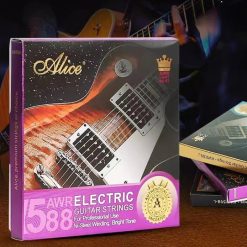
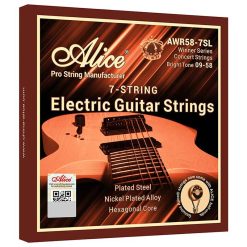
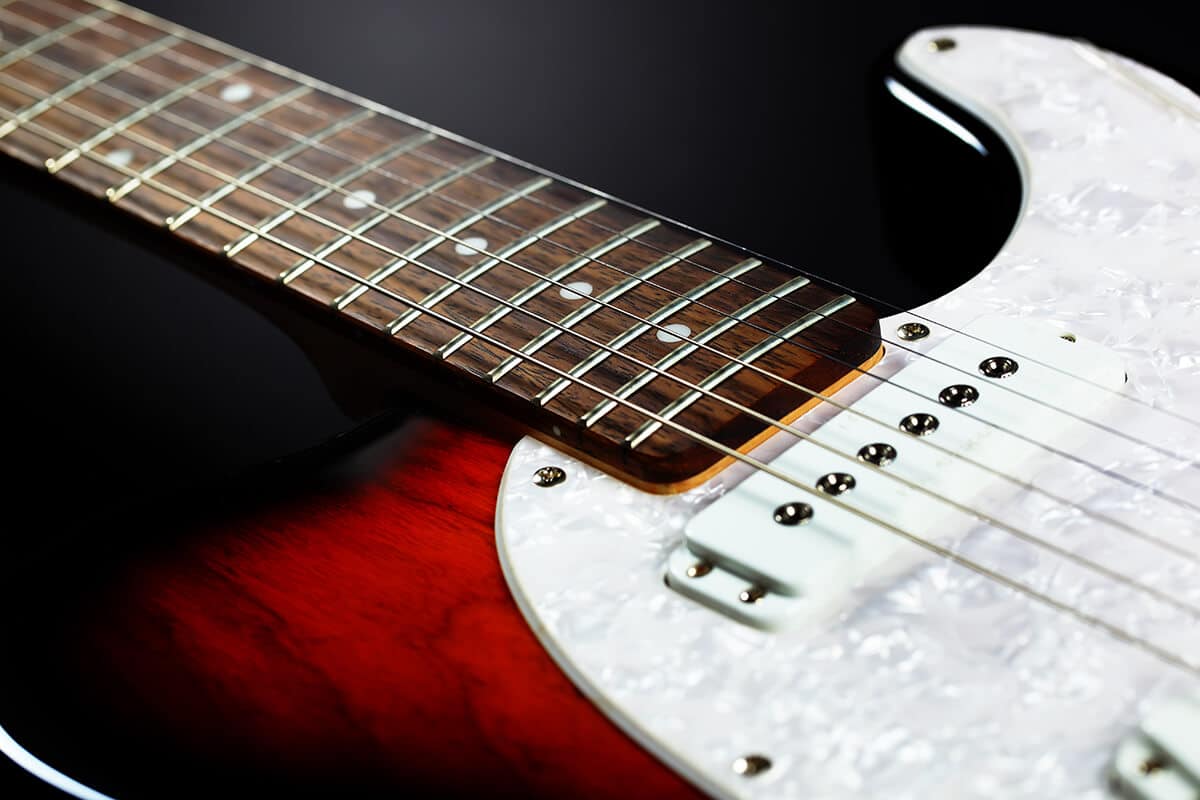
The electric guitar is an essential instrument in the world of music. Its strings, which are the soul of the instrument, play a crucial role in sound production. There is a wide variety of strings available on the market, each with its own characteristics and advantages. Among the most popular are the Ernie Ball Strings, the D’Addario Strings, the Elixir Strings, and the Fender Strings. The choice of strings can have a significant influence on the guitar’s tone, playability, and even the lifespan of the instrument.
Brief history of electric guitar strings
Electric guitar strings have a fascinating history that began with the earliest guitar models such as the Les Paul Guitar and the Stratocaster Guitar. Over time, many manufacturers such as Ernie Ball, D’Addario, and Elixir have innovated and developed new types of strings, using a variety of materials such as nickel, steel, and different alloys. Nickel strings are particularly appreciated for their warm and vintage tone, while steel strings are known for their brightness and sustain.
Understanding the importance of strings in the guitar’s sound
The sound of an electric guitar is greatly influenced by the type of strings used. The tension, thickness, and material of the strings can all affect the tone and resonance of the instrument. For example, thicker strings tend to produce a richer and fuller sound, while thinner strings will offer a brighter and clearer sound.
Different types of electric guitar strings
The electric guitar is a versatile musical instrument that offers a wide variety of sounds and tones. A significant part of this broad sound spectrum is attributable to the different types of strings used. The choice of strings can have a significant impact on the sound of the guitar and the tone of the strings. Among the many brands on the market, we find Ernie Ball Strings, D’Addario Strings, Elixir Strings and Fender Strings. Each offers a variety of materials and string tensions to meet the needs of musicians.
Nickel-plated steel strings
Nickel-plated steel strings are among the most popular for the electric guitar. Brands like GHS Strings or Rotosound Strings offer these types of strings which are appreciated for their balanced tone and comfortable feel. The steel and nickel alloy produces string vibrations that are easily detected by an electric guitar’s magnetic sensors, making them ideal for a variety of musical styles, including jazz and blues.
Stainless steel strings
Dean Markley Strings and Thomastik Strings, are known for their brightness and durability. They are often chosen by musicians who play music genres requiring a clear and sharp tone, such as country or rock. Moreover, stainless steel is more resistant to corrosion, thus extending the lifespan of the strings.
How to choose the right strings for your electric guitar?
Choosing strings for an electric guitar can seem complex, especially with the plethora of options available on the market. The Ernie Ball Strings, D’Addario Strings, Elixir Strings, and Fender Strings are among the most popular for guitarists of all levels. These brands offer a wide range of string materials, ranging from steel and nickel strings to bronze, phosphor, and titanium strings.
Understanding the importance of string gauge
The gauge, or thickness of the strings, plays a crucial role in the quality of the sound produced by the guitar. Thicker strings generally produce a richer and fuller sound, while thinner strings are easier to play and may be preferred by beginners. The tension of the strings also influences the sound and playing comfort. Therefore, it is essential to understand your personal preferences before making a choice.
Matching the strings to your playing style
In addition to the gauge and tension, the material of the strings also has a significant impact on the tone of the guitar.GHS Strings, Rotosound Strings, and Martin Strings also offer specific strings for different music styles.
Maintaining the strings of your electric guitar
Electric guitar strings, whether they are Ernie Ball Strings, D’Addario Strings, Elixir Strings or Fender Strings play a crucial role in the quality of the sound produced by the instrument. These strings, made of different materials like nickel, steel, bronze, titanium or phosphorus, require regular maintenance to maintain their tone and extend their lifespan.
When and how to change the strings
Changing strings is an important step in maintaining your guitar. Professional musicians recommend changing the strings every 1 to 3 months, depending on usage and playing conditions. For beginners, a change every 4 to 6 months may suffice. The string changing process requires specific guitar accessories, available in most music stores. Tuning techniques are also essential to ensure optimal string tension, which contributes to the quality of the strings’ vibrations and consequently, the sound of the guitar.
Tips for daily string maintenance
Daily string maintenance is just as important as their regular replacement. Cleaning the strings after each playing session can help extend their lifespan.Specific products for cleaning strings are available in music stores, but a soft, dry cloth can also do the job. For wound strings, a soft toothbrush can be used to remove debris between the wires. Finally, good storage of the guitar in a case protected from moisture, dust, and temperature variations can help preserve the quality of the strings.
Subscribe to Our Newsletter and Get 5% Off Your First Order!*
* Excludes ongoing sales.
By signing up, you will receive your 5% discount code by email. You can unsubscribe at any time. See our privacy and cookie policy for more information.