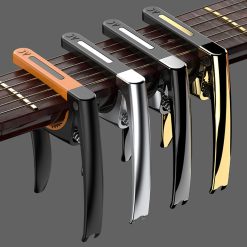
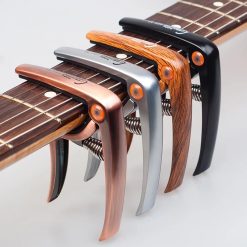
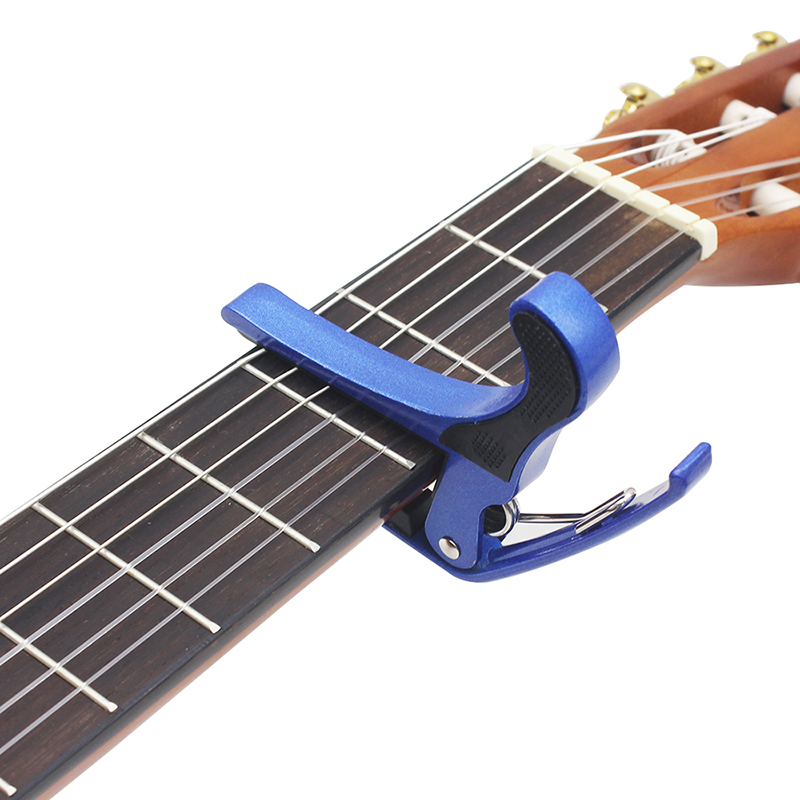
12,90€
This product has multiple variants. The options may be chosen on the product page
Everything You Need to Know About Capos!
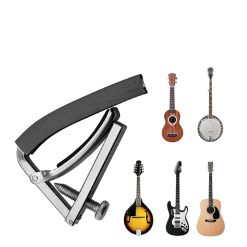
The capo, an essential accessory for any musician, is a device used on the neck of a string instrument to raise its pitch. It is commonly used on instruments such as the guitar, banjo, ukulele, and mandolin. Capos are available in different types and models, including the adjustable capo, the classic capo, and the electric capo. Whether you are a professional musician looking for the perfect capo technique or a beginner trying to buy your first capo, it is important to understand how it works and how to use it.
What is a Capo?
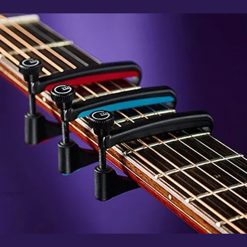
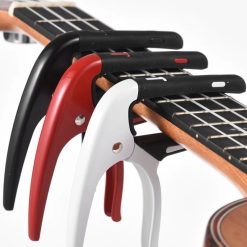
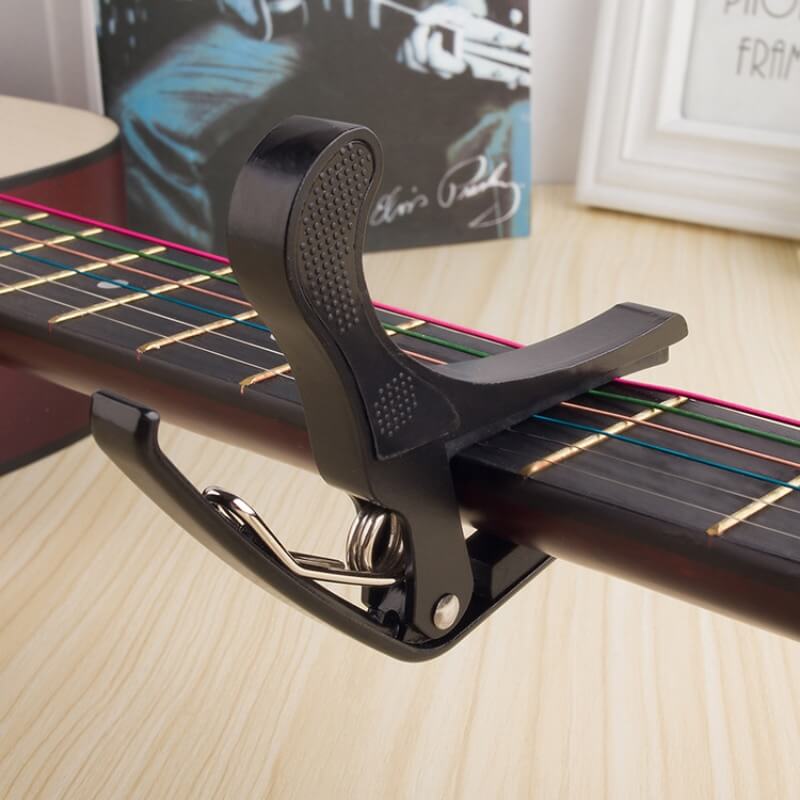
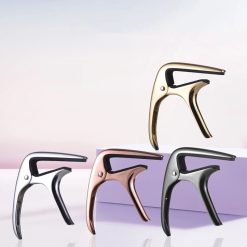
A capo is a device that is clamped onto the neck of a string instrument to shorten the strings and thus raise the instrument’s pitch. It is widely used in many styles of music and is particularly popular among guitarists. Capos are available in different shapes and sizes, designed to be used on different types of instruments, from the guitar capo to the ukulele capo and the banjo capo. They are generally made from durable, high-quality materials to ensure long-term use.
History and Origins of the Capo
The capo has a long history that dates back centuries. It was used in European music as early as the 17th century and became popular in folk and popular music in the 20th century. Today, many manufacturers produce capos, including renowned brands such as Thalia, Shubb, Fender, Gibson, and Ibanez.adjustable capo for its flexibility or a luxury capo for its durability and quality, there is a capo for every musician and every instrument.
Types of Capos and their uses
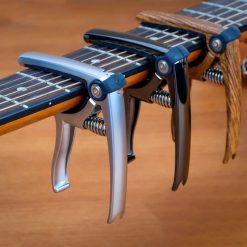
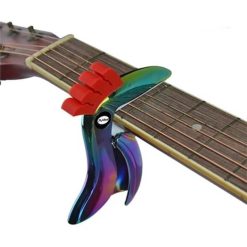
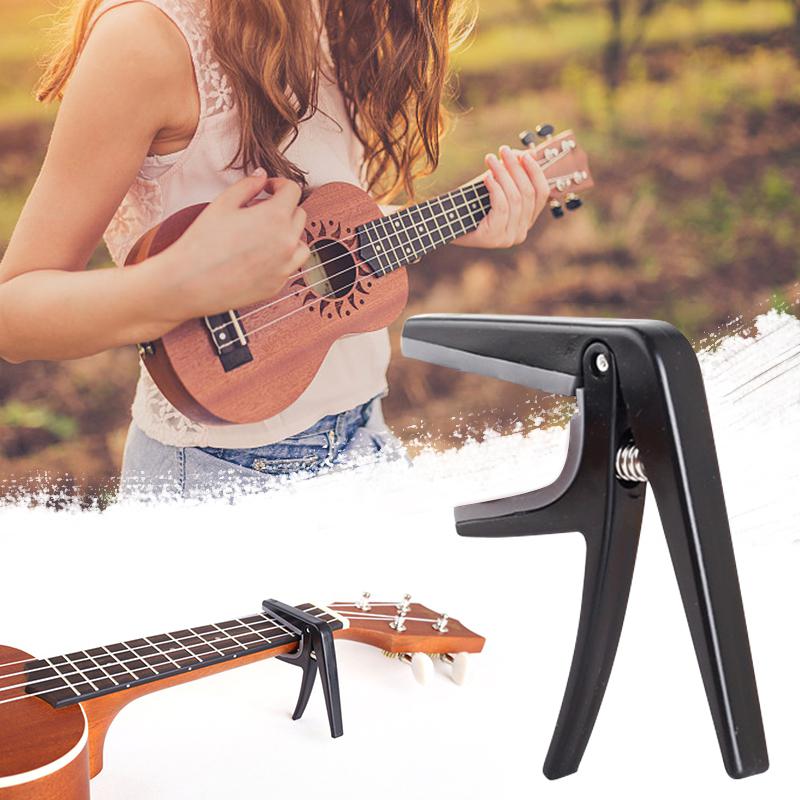
The capo, an essential accessory for many musicians, is available in several types, each suited to a specific instrument or particular technique. The Guitar Capo is the most common, used to change the key of a guitar without having to retune the instrument. Specific versions, like the Ukulele Capo, Banjo Capo or Mandolin Capo, are perfectly suited to these smaller stringed instruments. Capos are also classified according to their mechanism, whether it is adjustable or not. An Adjustable Capo allows for custom pressure on the strings, which can be beneficial to avoid buzz. Among the most popular brands, we find the Thalia Capo, the Shubb Capo and the Kyser Capo.
The different types of Capos
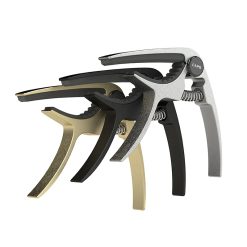
In addition to differentiation by instrument, capos also vary in terms of design and functionality. For example, the Classical Capo is generally made of wood or metal and uses a lever mechanism, while the Electric Capo is often lighter and uses a spring system. For those looking for a high-quality tool, the offers additional features, such as robust construction and better intonation. At the other end of the spectrum, the Economical Capo is an affordable choice for beginners or musicians on a limited budget.
How and when to use a Capo
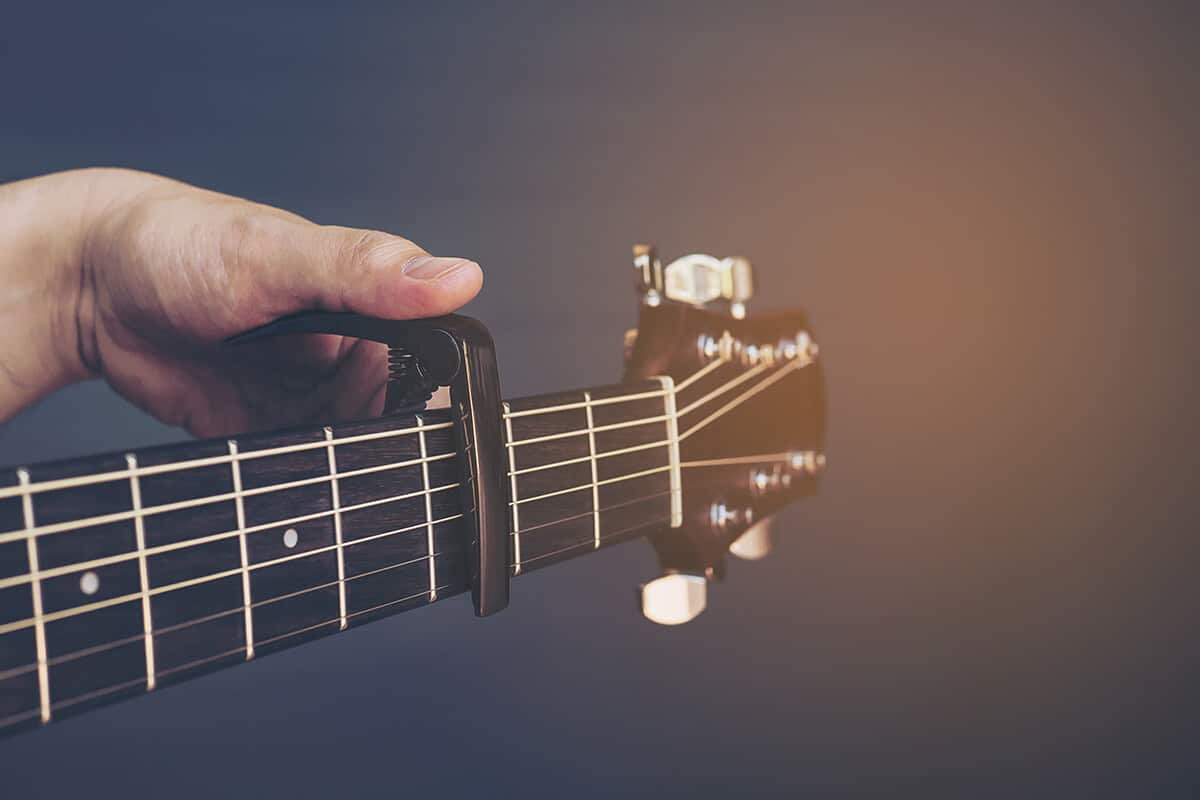
The Use of Capo depends on the instrument and the type of music played. Generally, a capo is used to increase the pitch of a stringed instrument without having to change the chords you play. It can also be used to play songs that require higher tones than the instrument can produce without a capo. In terms of positioning, the capo is usually placed on the fret where you want the new “nut” to be. Always remember to position it just behind the fret to get a clear tone and to Avoid Capo Buzz.
How to choose your Capo
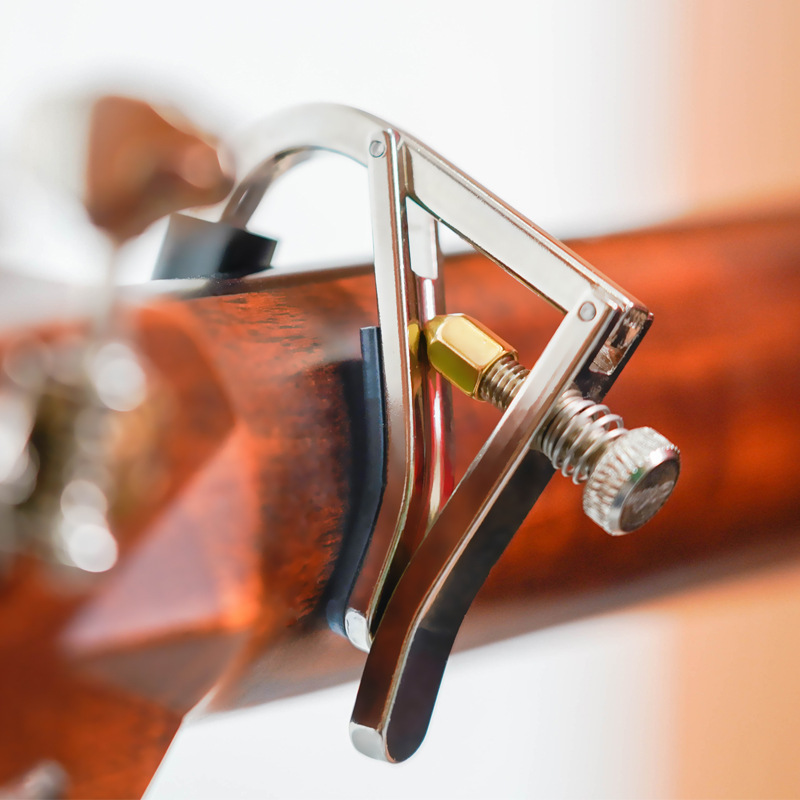
Choosing the Capo ideal for your instrument can be a delicate process, especially with the variety of options available on the market. The choice of Capo largely depends on the instrument you play, whether it’s a guitar, a ukulele, a banjo, a bass or a mandolin. The first thing to consider is whether you need an adjustable capo or not. An adjustable capo allows you to adjust the pressure exerted on the strings, which can be essential to avoid buzz and get a clear sound.
Selection Criteria for a Capo
In addition to the type of instrument, other important criteria to consider when purchasing a capo include quality, durability, and cost. It is recommended to opt for a quality capo that is durable and can withstand daily wear and tear. The choice between an economical capo and a deluxe capo depends on your budget and personal preferences. It is also important to note that some capos are easier to use than others, which can be a crucial selection criterion for beginners.
Recommendations and Popular Capo Brands
When it comes to brands, there are a number of popular and reliable brands to choose from. Thalia, Shubb, Fender, Gibson, Ibanez, Martin, Yamaha, Taylor, OnStage, Kyser, SpiderCapo, Donner, Walther, Jim Dunlop, Sirius, Neewer, Planet Waves, DAddario, Grover, Hricane, and Clifton are some of the most appreciated and widely used capo brands. Each brand offers a variety of models suitable for different types of instruments. Ultimately, the choice of the ideal capo depends on your individual needs and preferences.
Techniques and Tips for Using a Capo
A Capo is an indispensable accessory for any musician, whether for the guitar, banjo, ukulele, or mandolin. It allows you to change the pitch of the strings without having to retune the instrument.
How to correctly position a Capo
The Capo technique requires a certain precision to avoid discordances. It should be placed perpendicular to the frets, about half a centimeter from the desired fret. The pressure must be sufficient to block the strings, but without crushing them, to avoid altering their height. For optimal use, it is advisable to position it with the hand that does not strum the strings, usually the left hand for right-handers. Adjustable capos like the Fender Capo or the Gibson Capo allow customizable pressure, to adapt to all types of instruments and strings.
Tips for optimizing the use of your Capo
For optimal use of your Capo, a few tips can be implemented. Thus, to avoid buzz, it is important to properly position the Capo. Similarly, it is advisable to always check the tuning of the instrument after placing the Capo, as the pressure exerted can slightly alter the pitch of the notes. Finally, don’t hesitate to experiment with your Capo, by placing it on different frets to discover new sounds, or by using specific capos like the SpiderCapo, which allows you to individually block each string.
Subscribe to Our Newsletter and Get 5% Off Your First Order!*
* Excludes ongoing sales.
By signing up, you will receive your 5% discount code by email. You can unsubscribe at any time. See our privacy and cookie policy for more information.