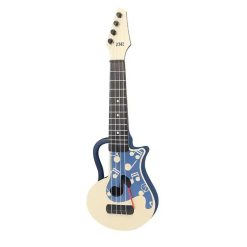
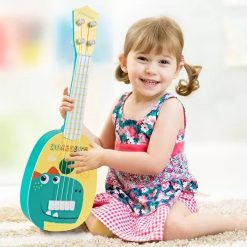
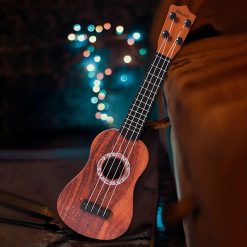
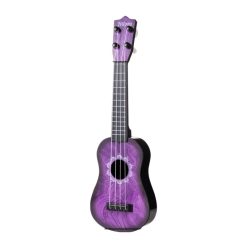
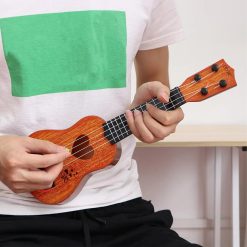
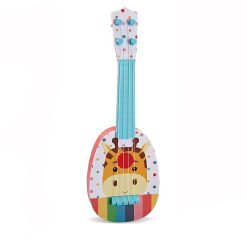
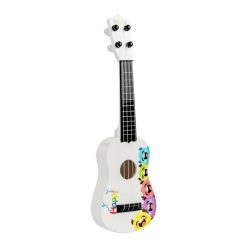
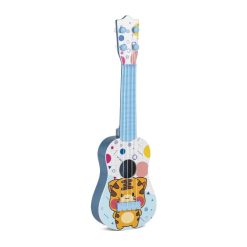
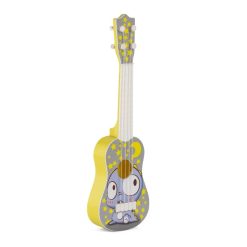
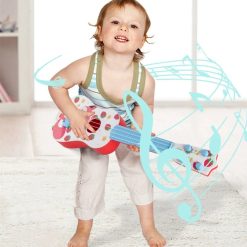
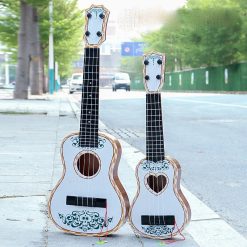
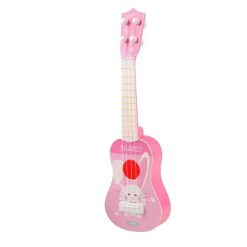
Which guitar should you choose for your little musician?
What criteria should be considered when choosing a guitar for a child?
Child guitar sizes
When you don’t know which guitar to choose for your child, it’s essential to take into account the standard size of the instrument.
Children’s guitars are often smaller than adult guitars, making learning easier and more enjoyable for beginners.
A good guitar for a young guitarist should be the right guitar size to prevent it from being too big and difficult to handle.
For children aged 12 and over, a regular guitar may be suitable, but for younger ones, a small guitar or even a ukulele may be a better option.
Children’s guitars often have nylon strings, which makes them softer for the fingers and therefore more pleasant to play. If you are unsure about the right guitar size for your child, it is always possible to consult experts at dealers. They can help you choose the first child’s guitar.
A travel guitar can also be an interesting option thanks to its reduced size.
Please note that a guitar for your child should not only be the right size, but also suited to their build and musical tastes.
The strings should be easy to press so that the child can quickly learn to play the guitar.
Models under 50 € exist, but it is sometimes better to invest a little more to get a good guitar that will facilitate learning.
Finally, for children who want to start at a very young age, it is entirely possible to find junior models.
What type of guitar is suitable for a beginner?
small-sized guitar.
This guitar should especially have nylon strings as they are softer on the fingers.
When choosing an instrument, it is essential to look for specific features such as the scale length and the distance between the bridge and the nut.
Be careful that the instrument is not a toy, but a real musical instrument!
Quality guitars are generally more robust and offer better sound.
Before buying an instrument, it may be useful to detail the specifications and try different models to get a precise idea of what suits best.
You can buy guitars in different colors, but make sure to choose one that is smaller than an adult guitar.
How to find a good-sized guitar?
Finding a good-sized guitar is essential to ensure comfort and good posture when playing.
First of all, it is important to consider the age and size of the musician.
For children, a 1/2 or 3/4 guitar may be more appropriate than a full-sized guitar.
In addition, it is crucial to check the quality of the instrument. A guitar with nylon strings can be softer on the fingers of beginners, which facilitates learning.
Do not confuse a quality guitar with a toy.
Make sure the instrument is well built and produces a good sound.
It is better to avoid too cheap guitars which may be closer to a toy than a serious instrument.
What is the difference between a classical guitar and a folk guitar for children?
The advantages of the classical guitar for children
The classical guitar has many advantages for children who want to learn to play a musical instrument.
First of all, it is equipped with nylon strings, which make the touch softer and less painful for the delicate fingers of young musicians.
These nylon strings are also easier to press, thus facilitating the learning of chords and basic melodies.
In addition, the classical guitar is often lighter and smaller than other types of guitars, which allows children to handle it more easily.
The suitable size of the instrument contributes to a correct and comfortable posture, essential for good playing technique.
Finally, the classical guitar offers a wide variety of repertoires, ranging from classical music to popular songs, allowing children to develop a wide range of musical skills while cultivating their passion.
This can also help them to improve their concentration, memory and coordination.
Why choose a folk guitar for children?
Choosing a folk guitar for children is an excellent option to introduce young people to children’s music.
Indeed, these guitars are often equipped with nylon strings, which are softer and easier to play for small hands.
In addition, they are generally designed for beginners, with a suitable finish and an affordable price.accessories like a tuner or a capo, allowing for easy play of various pieces, from rock to folk music.
The most popular instruments also include guitars from brands like Vtech and Music Alley.
Whether for playing rock or learning the basics, a variety of guitars are available to young musicians, encouraging them to explore their musical passion.
Comparison between nylon strings and steel strings
Nylon strings and steel strings offer distinct characteristics that make them suitable for different styles of play.
For beginner guitarists, especially children, nylon strings are softer on the fingers, which facilitates learning. They also produce a warmer sound, ideal for ballads and classical music.
On the other hand, steel strings are often favored for rock guitar, as they offer greater projection and better dynamic response. These strings allow for a more punchy sound, especially when played with a pick.
For those looking to explore a range of guitars, it’s essential to choose the strings that match their musical style and level of experience.
In summary, the choice between nylon strings and steel strings depends on personal preferences and the specific needs of the musician.
Should I buy an acoustic guitar or an electric guitar for my child?
The advantages of the acoustic guitar
Its ease of use and lack of need for electronic equipment allow young people to focus on learning the basics of music.
In addition, the acoustic guitar offers a warm and authentic sound, making it perfect for playing solo or in a group.
Musicians can easily take it anywhere, thus facilitating musical gatherings among friends.
Finally, the acoustic guitar is accessible to everyone, regardless of skill level, and its maintenance is relatively simple.
It’s a great starting point for anyone wishing to dive into the world of music while developing artistic skills.
The benefits of an electric guitar for children
The electric guitar is an excellent choice for children who wish to learn to play music as it offers a wide variety of sounds and styles, which can stimulate the interest of young musicians.
Thanks to its sound effects and customization possibilities, children can explore different musical genres, ranging from rock to jazz, through pop.
In addition, the electric guitar is often lighter and easier to handle than other instruments, making it accessible to the youngest.
Learning the guitar also develops cognitive and motor skills, contributing to concentration and coordination.
Children thus learn discipline and perseverance, essential qualities for their personal development.
Finally, playing the electric guitar can be a rewarding social activity. Children can play in groups, participate in music classes, or even join bands of young musicians, thus fostering unforgettable friendships and moments of sharing.
How to teach a child guitar step by step?
The first guitar lessons for children
The first guitar lessons for children are an exciting and rewarding step.
At this age, it is essential to introduce the instrument in a fun and engaging way. Children learn best when they are having fun, so exercises should include simple games and songs that captivate their attention.
A gradual approach, starting with basic chords and simple rhythms, helps to build their confidence and motivation.
Lessons can be accompanied by visual aids, such as colorful tablatures or chord images, to make learning more accessible.
It is also important to encourage children to listen to a variety of music to stimulate their creativity.
Teachers need to be patient and adaptive, as each child progresses at their own pace.
Thus, these first lessons can sow the seeds of a lasting passion for music.
The best guitar courses for children
When looking for the best guitar courses for children, it is essential to find an approach that suits their age and level.
Many programs offer fun lessons that incorporate musical games, making learning the guitar both fun and rewarding.
The group lessons online platforms that offer interactive guitar lessons, allowing children to follow lessons at their own pace. These online resources often include videos, exercises, and tutorials tailored to young musicians.
Choosing an experienced and passionate teacher for teaching children is also crucial to ensure a positive experience.
What are the best guitar models for children?
The best acoustic guitars for children
When it comes to choosing the best acoustic guitars for children, it is essential to consider the size and weight of the instrument.
1/2 or 3/4 size guitars are ideal for young musicians, as they are easier to handle.
Brands like Yamaha and Fender offer models specially designed for children, offering a good balance between sound quality and comfort.
In addition, ease of play is a crucial factor. Guitars with nylon strings, like those from Cordoba, are often recommended, as they are softer on children’s fingers.
It is also wise to check that the guitar has good action and a well-adjusted neck to avoid any frustration during learning.
Finally, don’t forget to take into account accessories like cases and tuners for an optimal playing experience.
The best electric guitars for children
When looking for the best electric guitars for children, it is essential to consider models suitable for their size and level of experience.1/2 or 3/4 guitars, are ideal for young musicians, as they allow them to play comfortably.
Renowned brands like Squier and Yamaha offer affordable and quality models that are perfectly suited for beginners.
In addition, it is important to choose a guitar with a nice sound and good playability. Guitars with a basswood body or maple often provide a good balance between weight and sound quality.
Also consider investing in a amplifier suitable for your child to explore different tones and effects.
Finally, don’t forget the accessories, like a strap and a case, to protect the instrument and facilitate its transport.
Recommended brands like Yamaha and Fender
Yamaha and Fender are 2 iconic brands in the world of music, known for their quality and innovation.
Yamaha, founded in 1887, is renowned for its string instruments, pianos, and guitars, offering a wide range suited to all levels of musicians. Its acoustic guitars, for example, are prized for their rich sound and playing comfort.
On the other hand, Fender, established in 1946, is famous for its electric guitars and amplifiers. Iconic models like the Stratocaster and the Telecaster have shaped the history of rock and blues, attracting renowned musicians. Fender instruments are often praised for their durability and versatility, making them indispensable for stage performances.
What is the best child’s guitar to start with?
To choose the best child’s guitar, it is important to consider
For younger ones, a classical guitar with nylon strings is often recommended, as it is gentler on the fingers.
For children aged 8 and over, a acoustic guitar or a folk guitar might be suitable.
It is also essential to choose a suitably sized guitar, so that the child can handle it easily.
At what age can a child start playing the guitar?
A child can start playing the guitar from the age of 5, depending on their size and level of concentration.
It is crucial to choose a child’s guitar that is not too big.
For very young children, a toy guitar can also be an option, but it is better to opt for a real musical instrument for serious learning.
Which child’s guitar is the most suitable?
The classical guitar is often the most suitable for beginner children thanks to its nylon strings, which are softer and easier to play.
However, if the child shows an interest in a specific musical style, an acoustic guitar or an electric guitar can also be considered.
It is essential to test several models to see which one suits the child best.
What are the benefits of learning to play the guitar for a child?
Learning to play the guitar offers many benefits to children.
It improves their coordination, develops their sense of rhythm, and stimulates their creativity.
In addition, playing the guitar can boost self-confidence and encourage discipline through regular practice.
It can also be a great way to socialize, by joining music groups or guitar classes.