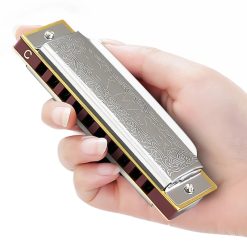
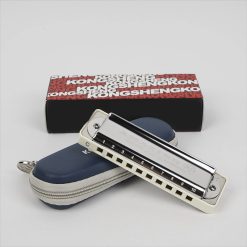
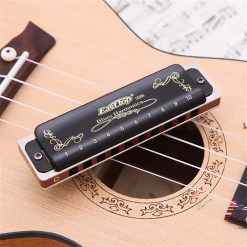
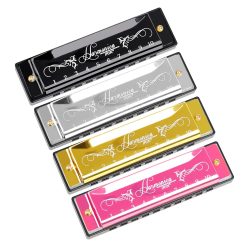
The Shop for Quality Diatonic and Chromatic Harmonicas
What are the different types of harmonicas available?
What are Diatonic Harmonicas?
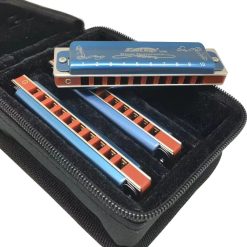
Diatonic harmonicas are well-known musical instruments, particularly in folklore and blues harp. This type of classic harmonica is often associated with famous harmonica players such as Larry Adler.
Made with stainless steel reeds and a brass comb, this high-quality instrument comes in several models, ranging from 10 holes to 16 holes.
Thanks to its many techniques and musical styles, the diatonic harmonica has historically proven its worth in Western music repertoire. It allows you to play the entire scale over 3 octaves , thus complementing the saxophone or accordion, the tremolo, and free reeds of folk and folklore music.
What are Chromatic Harmonicas?
Chromatic harmonicas are harmonicas with 12 holes , offering a range of 48 different tones . Unlike the standard 10-hole diatonic harmonica, chromatic harmonicas allow you to play all the notes of the major scale on a single octave without having to use the slider.
They thus offer a greater variety of sounds and can cover 2 full octaves .
The chromatic harmonica was invented in 1857 by the clockmaker Melodica.
Chromatic harmonicas can be inexpensive or more rigid and progressive like the Hohner Marine Band Deluxe harmonica . They are often equipped with a cover , brass plates , and a microphone for better sound amplification. The most common tones for chromatic harmonicas are Eb and Bb .
What are Blues Harmonicas?
Blues Harmonicas are 10-hole diatonic harmonicas used for playing the blues. They are generally tuned in E and are capable of playing a complete range from D to E on a single octave . Harmonica players who play the blues are often associated with these types of harmonicas as they allow for the creation of the genre’s characteristic sound. In general, a blues harmonica measures about 10 cm long , however, models can vary in size depending on the artist’s preferences.
What distinguishes blues harmonicas is their tuning in E major.
This means that the notes played on the harmonica correspond to the E major scale, allowing harmonica players to easily play in this key without having to transpose. This feature makes blues harmonicas an essential instrument for any blues musician who wants to capture the essence and emotion of this unique musical style .
How to choose the right harmonica?
Diatonic vs Chromatic Harmonicas
10-hole diatonic harmonicas are popular instruments for folk and blues music players. They are designed to play in a major key and are limited to a single diatonic scale. This means that each hole produces a note from the major scale, offering a limited range of one octave.
In contrast, chromatic harmonicas offer more versatility by allowing players to play in all keys, major and minor . They are equipped with a button at the end that allows for altered notes, giving access to all the notes of the chromatic scale. This means that you can play in any key and explore a wider and more complex range of notes. The choice between a 10-hole diatonic harmonica and a chromatic harmonica depends on the player’s preferences and the style of music they wish to play.
Diatonic harmonicas are perfect for a more traditional and bluesy sound , while chromatic harmonicas offer more flexibility and possibilities for musical exploration.
The different tones of a harmonica
The different tones of a harmonica offer musicians the opportunity to explore a wealth of distinct sounds. Among the most common tones, we find C major, A major, D major and many others.
Each tone has its own sound signature, thus allowing musicians to vary the atmospheres and emotions conveyed by their music.
For example, the C major is often used for happier and more playful pieces, while the A major can bring a touch of melancholy or sweetness.
Some harmonicas even offer the possibility to change the key during play, thanks to removable plates or sophisticated adjustment systems. This variation in keys allows musicians to express all their creativity and play rich and diversified music.
What are the popular models of the Hohner brand?
Hohner Marine Band Crossover
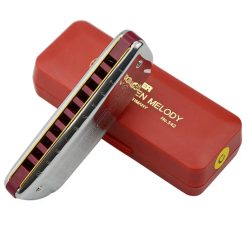
Hohner Marine Band Deluxe
How to maintain your harmonica to extend its lifespan?
Cleaning the Stainless Steel Harmonica
Cleaning the stainless steel harmonica can be a significant task to ensure the durability and sound quality of the instrument. Stainless steel is a sturdy and corrosion-resistant material, but it can also accumulate dirt and residues over time.
To not affect the sound of the harmonica, it is essential to clean the harmonica regularly.
Cleaning the stainless steel harmonica can be done by using specific products for this type of material. It is recommended to avoid abrasive products that could scratch the surface of the harmonica. A soft and clean cloth can be used to carefully wipe the stainless steel parts of the instrument, making sure to remove any trace of dirt or residue. In addition to regular cleaning, it is also important to protect the stainless steel harmonica by storing it in a suitable case or cover when not in use. This will help prevent scratches and damage that could occur during the transport or storage of the instrument.
Replacing the reeds of a harmonica
The reeds are the small metal strips that produce sound when air is blown through them.
Over time, these reeds can wear out, bend, or break, which affects the sound quality of the instrument. To maintain a harmonious and clear sound, it is essential to regularly replace the defective reeds.
This is an important task for any harmonica player.
There are several methods for replacing the reeds of a harmonica, depending on the model and brand of the instrument. Some players prefer to buy pre-made replacement reeds, while others choose to make them themselves from metal sheets.
Regardless of the method chosen, it is important to ensure that the new reeds fit perfectly to the instrument to avoid any playing or sound issues.
In the end, replacing the reeds of a harmonica is a necessary step to maintain the sound quality of the instrument. Whether playing blues, jazz, folk, or any other style of music, reeds in good condition are essential for producing a clear and harmonious sound.
Proper Storage of a Harmonica
The proper storage of a harmonica is crucial to ensure its longevity and optimal performance. To avoid corrosion and deterioration of metal parts, it is recommended to keep the harmonica in a suitable case or cover when it is not in use . Ideally, the harmonica should be stored in a dry place at room temperature, away from moisture and excessive heat. It is also important to regularly clean the harmonica after use to remove saliva and dust residues that could affect its sound. Finally, it is recommended to store the harmonica in a vertical position rather than horizontal , in order to prevent valve leaks and potential damage to the reeds. By following these simple tips, you will be able to enjoy your major harmonica for many worry-free years.
FAQ on Quality Diatonic and Chromatic Harmonicas
1 – What is a diatonic harmonica?
A diatonic harmonica is a type of harmonica designed to play in a single key with a reed system. It consists of 10 holes offering a diatonic scale.
2 – What is the difference between a diatonic and chromatic harmonica?
The diatonic harmonica is designed to play simple melodies in a specific key, while the chromatic harmonica has a mechanism that allows access to all notes of the scale, offering greater versatility.
3 – What are the most well-known brands for quality harmonicas?
The most renowned brands for quality harmonicas are Hohner , Seydel , and Suzuki . These brands offer different models suitable for various musical styles.
4 – How to choose the right harmonica for a beginner musician?
For a beginner , it is recommended to start with a quality diatonic harmonica in C major . It is also important to choose an instrument that is easy to play and maintain.
5 – What are the advantages of a 10-hole diatonic harmonica?
The 10-hole diatonic harmonica is popular for its compact size, ease of play, and versatility in various musical genres such as blues, country, and jazz.