

How to Choose a Banjo Strap?
How to choose your Banjo strap
Each guitarist adopts a different style when performing a musical composition with the Banjo. Most of them play the Banjo in a standing position. This therefore requires the use of a strap for optimal playing comfort.
But choosing the best strap model is not so easy. The right Banjo strap should perfectly combine a mix of best functionality, aesthetics, and design. With countless straps available online, here are some details to prioritize when you decide to acquire a quality Banjo strap model.
What length should you consider?
Like most plucked string instruments, the Banjo requires a horizontal playing position. The right hand is mainly used to strum the strings at the soundboard. And, the left hand plucks the strings on the neck to play a note or a musical chord. This allows the strap to be positioned at an optimal length for a comfortable musical session.
Take into account your posture and height, while relying on the approximate distance between the banjo’s attachment points and the harness’s path across your neck. This is a very important parameter for choosing the right length for your banjo strap. Often, players like to wear the Banjo on their right shoulder. This does not require a long harness. Others keep the positioning on the left shoulder and neck, which, a priori, requires a longer strap.
However, the most optimal solution is to opt for an adjustable strap. In this case, it is easier to adapt the strap to the position where you feel most comfortable playing your Banjo. Lengthen or shorten it according to your needs.
What is the optimal strap width?
The width of a Banjo strap varies from the smallest dimension of 1 cm to the largest 5 cm or even more. But this favorite American instrument does not require an imposing harness given its very relative size, no more and no less than a Ukulele. Only the Banjo’s neck is longer. The same goes for its weight. You are therefore freer to choose the width that brings you more style.
If you tend to play for extended periods, around one to two hours, it is more comfortable to opt for a wide strap. This will relieve your collarbone or shoulder.
Why choose a robust strap?
The quality of materials is very important when you need to invest in a Banjo strap. This prevents you from wasting time and money by turning to other low-end or entry-level models. You must carefully consider every detail, including the solidity of your strap’s materials: the fabric, the adjustment system, the attachment hooks, etc.
For the main component of the strap, different brands offer distinct fabrics and leathers. You can find a model in cotton, linen, suede, or synthetic nylon. Choose your Banjo strap according to your frequency of use. If you are a passionate player or a professional musician, it is advisable to choose a very resistant model like leather. It also offers a vintage look and an excellent match with your Banjo. Treat yourself to the luxury of playing with good grip.
For amateur players, a model made of cotton blended with nylon or linen can already do the trick. Choose a model adorned with leather on both ends of the strap. This will make your strap stronger and more durable.
As for various accessories such as hooks and adjustment buckles, it is preferable to have them in metal for more robustness. It is strongly advised against opting for low-end plastic hooks. The risk of breaking or dropping your Banjo is higher. This can also disrupt your mood and concentration on stage.
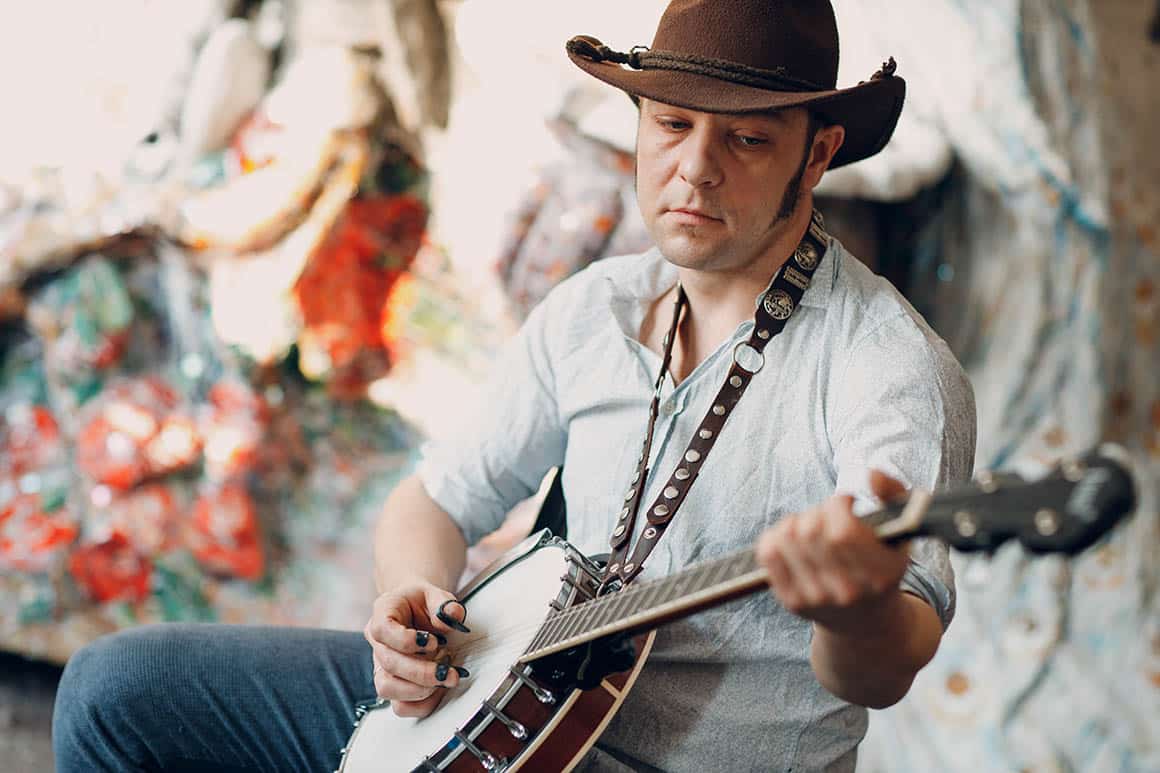
And comfort in all this!
With optimal length and width, you can already have a good understanding for your future banjo strap.
But padding is a little extra that one cannot refuse. There are various padding models on the market. You can find fur or synthetic neoprene foam or even an air bag. It can come in thousands of models. The padded surface of your strap will relieve the pressure of your small string instrument on your shoulders and neck. You will feel almost no pain in your back and neck at the end of each composition.
What fastening method should be adopted for a Banjo strap?
A classic Banjo may have a tension hoop at the tailpiece. This is where the strap is attached. Therefore, opt for straps with a carabiner-style hook or snap buckles for better fastening.
Thanks to a buckle integrated into the strap ends, press the button on your strap. Then, gently slide the hook onto the banjo’s rear hoop without applying too much pressure on the banjo’s tailpiece. For the other end, you can simply attach it to a tension hoop on the front pot of the Banjo.
What style to choose for a Banjo strap?
Choose a banjo strap that reflects your image. Strap designs come in several models: unicolor, multicolor, printed,… with a vintage or modern look.
Some players love to personalize their strap with skull, cartoon, or different patterns… If you have a strap with a standard width of about 5 cm, printed models add a lot of style and elegance. For models with thin straps, a unique color would be a great asset to make your banjo and your outfit shine. In this case, the color must match the overall theme.