

What are the origins of the Banjo?
The Origins of the Banjo
Among a wide range of plucked string instruments, the Banjo is one of the riches of North American musical culture. With a design similar to the ekonting, this instrument model features a gourd body connected to a long neck. This type of instrument also has strings. It comes in several models, ranging from the oldest to the more modern look. Very versatile, musicians can play various types of music with the Banjo, including bluegrass, jazz, funk, etc. But where does the Banjo come from? How did it arrive in the United States of America?
What is the Banjo?
The Banjo is an American plucked string musical instrument. It distinguishes itself from its neighbors such as the guitar, the Ukulele, etc., by its particular configuration. The Banjo is crafted with a wooden or metal body adorned with a stretched membrane. This indeed provides a unique sound quality to this type of instrument. Compared to the guitar, the Banjo offers a rather muffled sound that twangs like a person speaking with a nasal voice.
Its mini-drum style look is attached to a long neck for a more comfortable playing position for the player. Often, the Banjo is worn with a suitable strap for better grip. The neck, moreover, can be fretted or a fretless model. The Banjo can have 4 or 5 metal strings.
How was the Banjo born?
Although the Banjo is an instrument full of mystery, it is an instrument of North American origin. It was notably during the transatlantic slave trade of African slaves or the black slave trade between the 16th and 19th centuries that it all began. Women and men, or even black children, were forcibly deported from their countries of origin for slave trade to the United States. These victims, moreover, found comfort in their beliefs and culture through music. At that time, they used the ekonting.
And that’s where the Banjo draws its origins. The ekonting is the ancestral father of the Banjo. It is a favorite musical instrument of the inhabitants of West Africa: Senegal, Gambia, or even Guinea-Bissau. These are the instruments played by black men. They build them with gourds. Its neck is made of wood. The body is covered with animal skin, similar to the current manufacturing technique of the Banjo. And the three strings of the ekonting were made of animal gut, horsehair, or resistant hair. More precisely, this instrument is very popular in a small village in Senegal, called Casamance. Thus, the Banjo was born under the influence of the Iberian Peninsula of Portugal. The Banjo also comes from the word “Banza”.
Around the 17th century, the Banjo took over in the Caribbean, particularly in the West Indies. Then, the culture spread rapidly to the British colonies that would become North America or the United States today. It was African Americans who began to play the Banjo.
The Banjo experienced a real ascent around the 19th century with the famous minstrel shows. These were racist shows, also known as “Minstrel Shows,” in which white people blackened their faces to hurt and offend the slaves who played the Banjo. These Blackface shows contributed to the promotion of the Banjo throughout America. Each side: pro-slavery and anti-slavery, had its own opinion regarding these types of shows. Some believed in the resistance of black people in the face of such calamity. But the proponents of slavery were convinced of the joy of the slaves of that era through their music played on the Banjo.
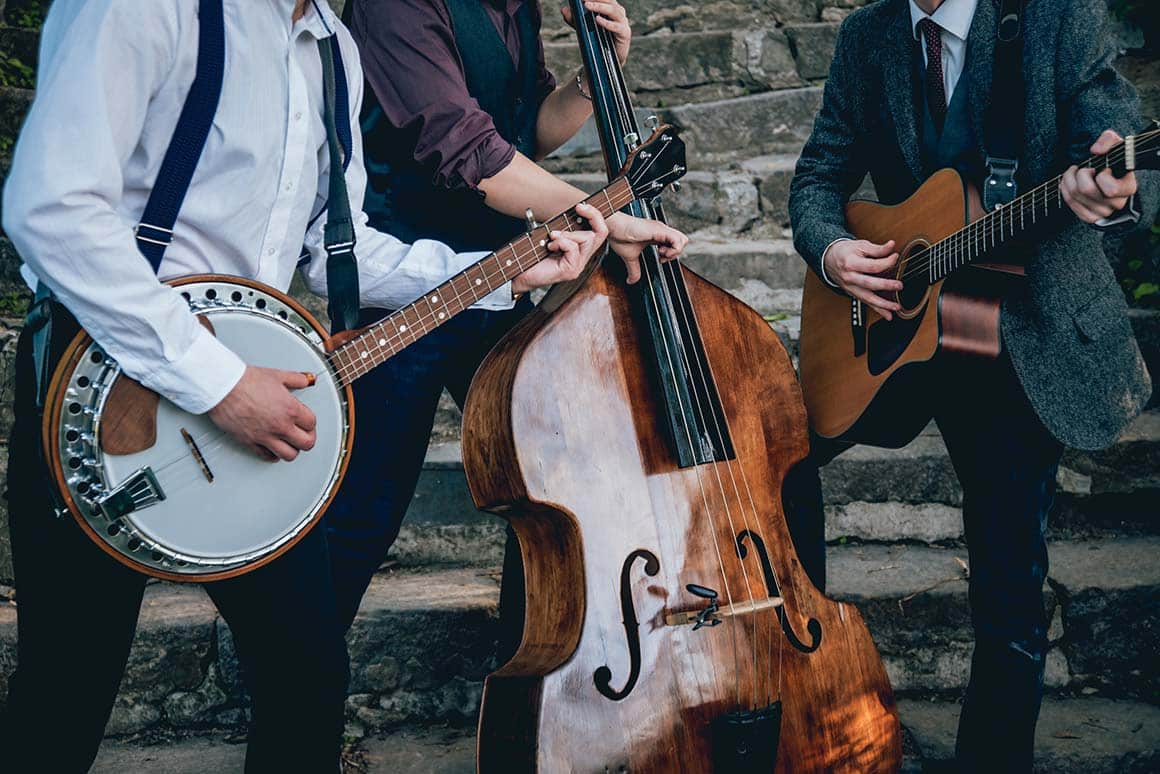
The History of the Banjo Through Time
After the Civil War in 1865, the Banjo achieved great success thanks to black minstrels. This instrument became an icon of African-American music of the era. The pioneers of popular music of the time: ragtime or jazz, used the Banjo in their compositions, such as Jimi Europe, etc. In 1910, New Orleans musicians, notably Jazzmen, launched the 4-string Banjo, which also became popular. These musicians used a plectrum to play their music.
Around the 1920s, the use of the Banjo took a turn despite its success in African-American culture. The amplified electric guitar took over from the Banjo with the advent of popular music: Rock, funk, etc. However, the poor white people of the time took up the use of the Banjo in country music.
Around 1930, the traditional Banjo resurfaced. New picking methods arrived in grand style, such as Frailing. The Bluegrass Boys, led by Earl Scruggs, for their part, used three-finger picking to make it a popular practice during this period.
Nowadays, the Banjo is an instrument seen all over the world. Learning methods also exist to make it a globally appreciated musical discipline. Multiple models are marketed everywhere, ranging from low-end designs to premium models.
How do you play the Banjo?
There are various picking techniques for the Banjo depending on the model. They are similar to finger-picking techniques on guitars. However, with the Banjo, the player can adopt the Clawhammer or Frailing style. The player primarily uses the thumb and index finger to play the strings from top to bottom. This allows for playing a pleasant Bluegrass-style melody.
Furthermore, there are two models of Banjo: the Open-back type or the Closed-back Banjo. As its name suggests, the Open-back Banjo model does not have a back. It generates little sound power. It’s a better option for the clawhammer technique. Whereas the closed-back model or Closed-back Banjo offers better sound. It is the most used by musicians who enjoy Country, Bluegrass music, etc.