Flexible Cellulose Guitar or Bass Picks – Random Colors – 3 Thicknesses to Choose From
Free Shipping
Flexible Cellulose Guitar or Bass Picks
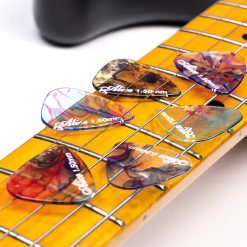
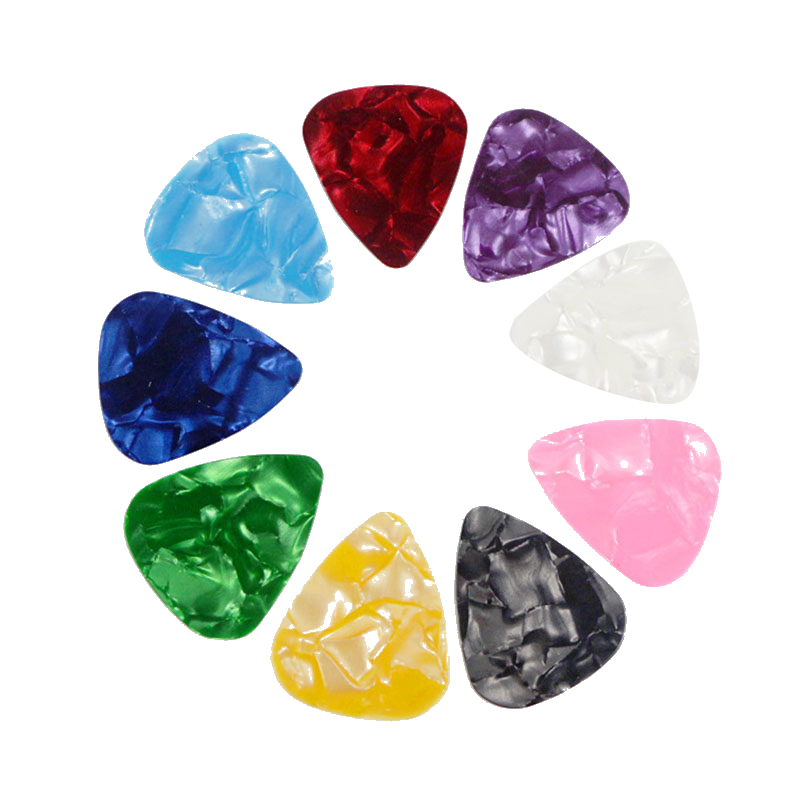
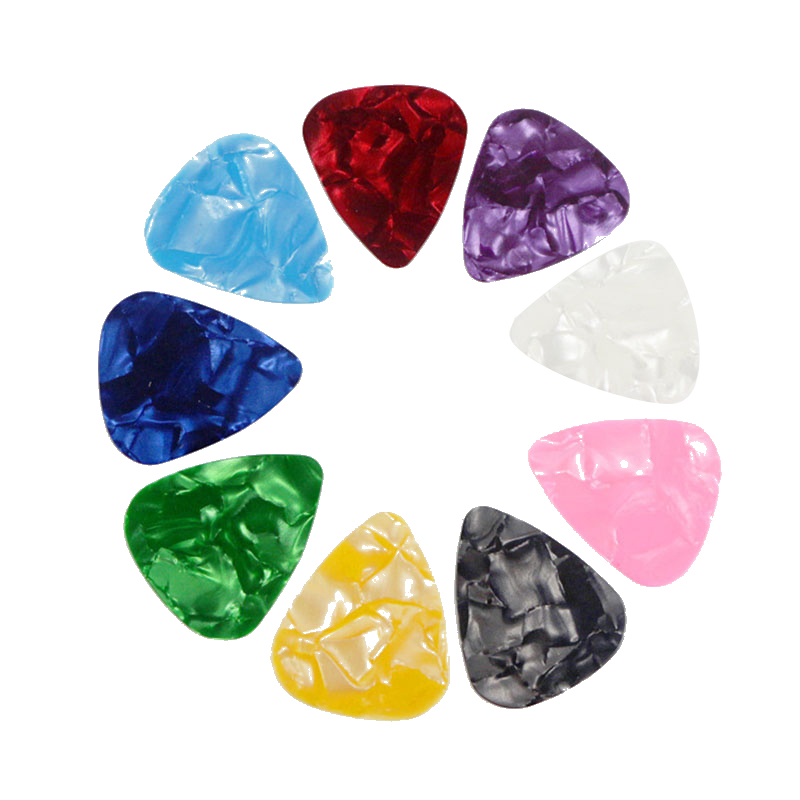
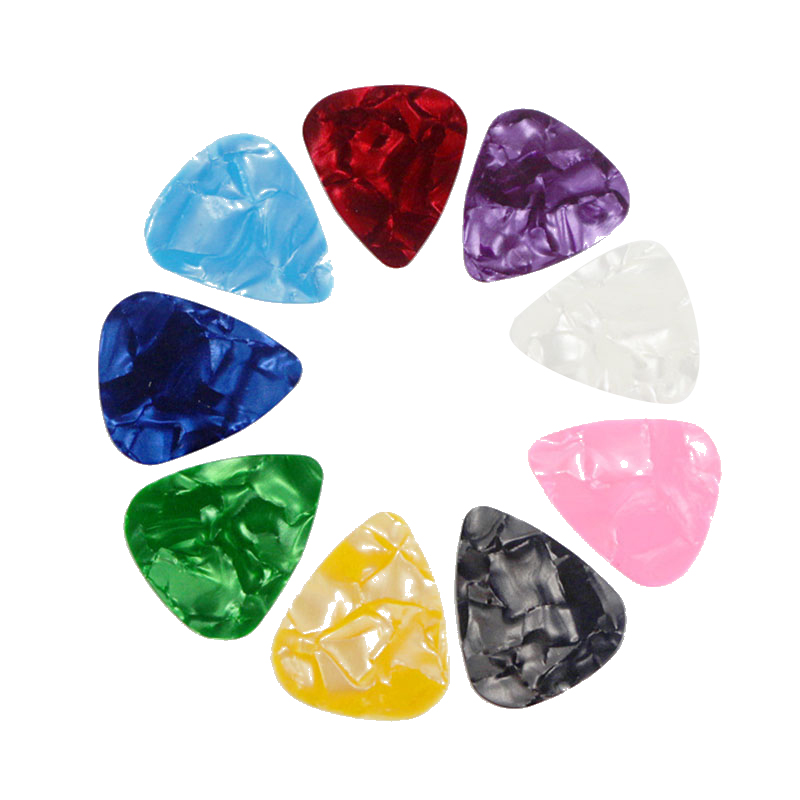
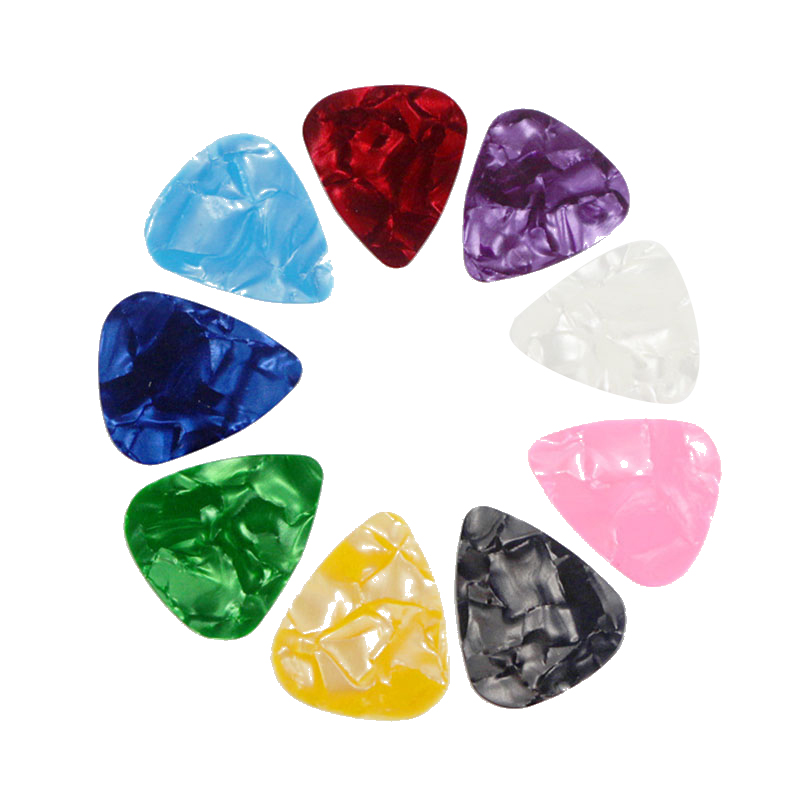
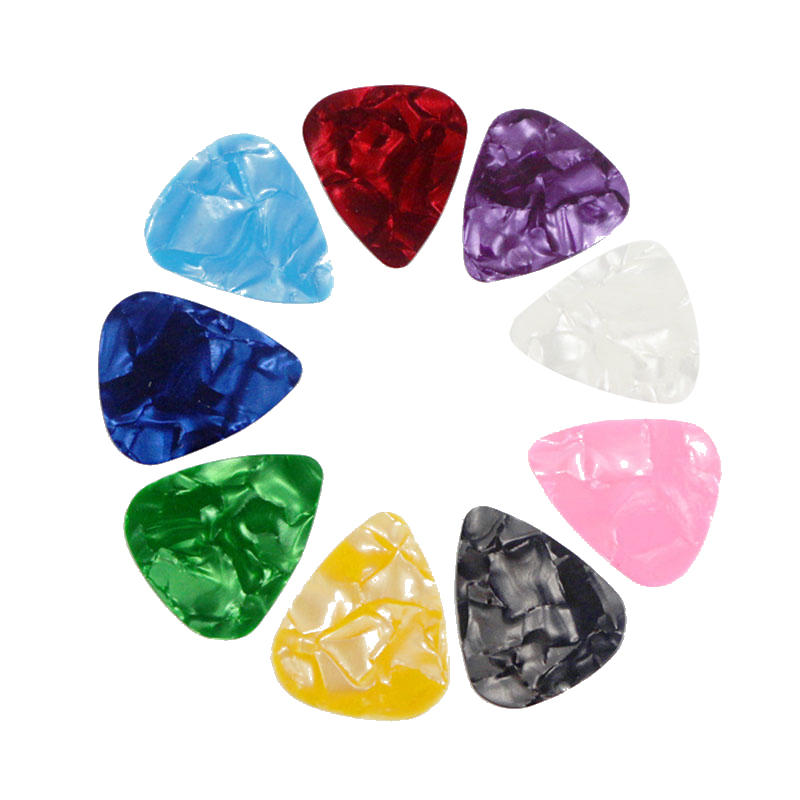
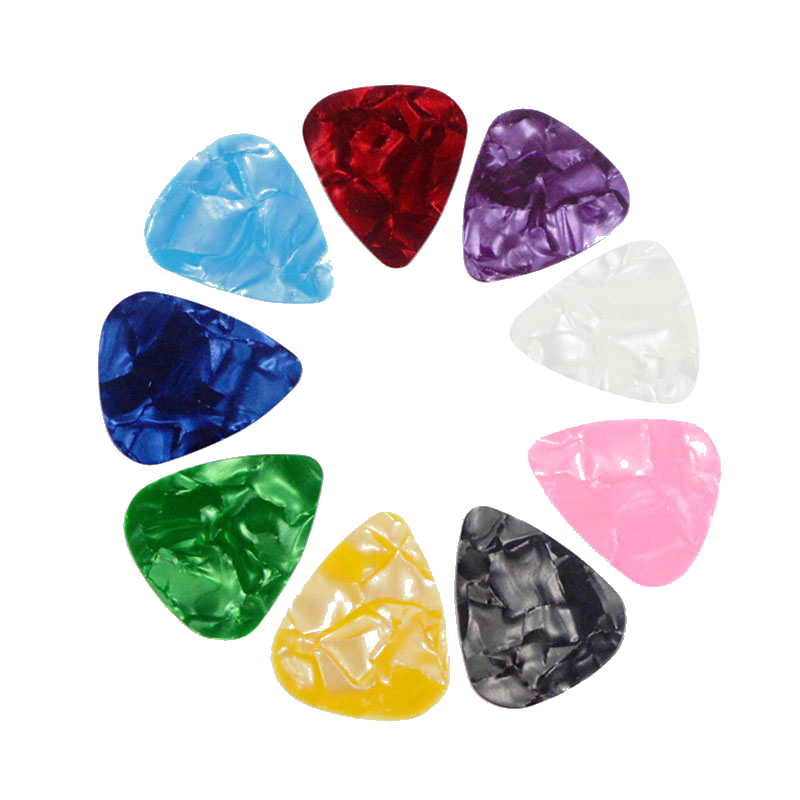
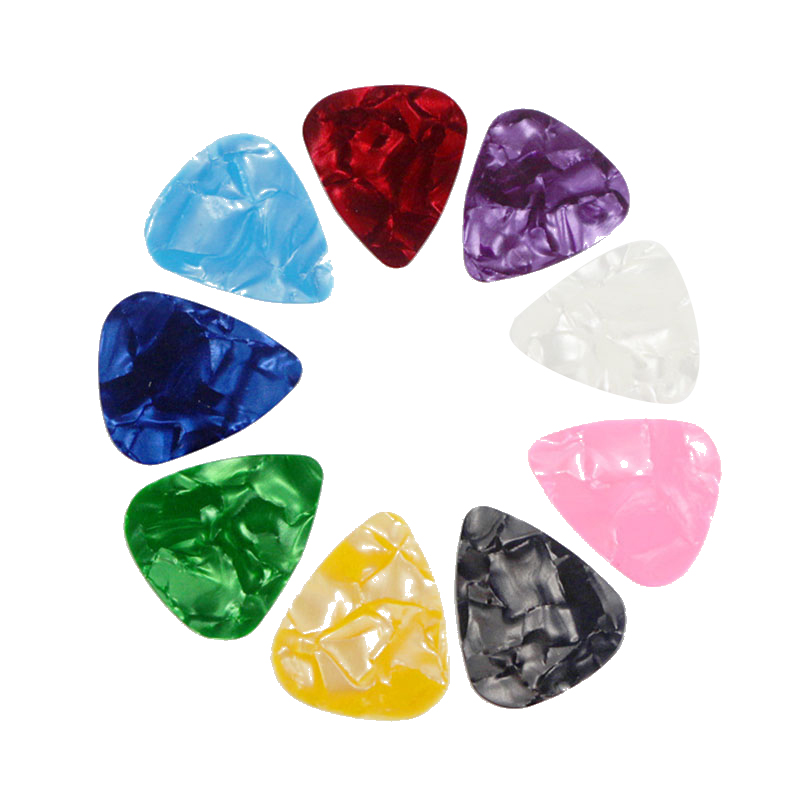
We love the celluloid effect that resembles horn and ivory: very chic!
The aesthetic is also enhanced by the fact that there are no inscriptions on the tool. Finally, the chosen colors complete the jewel-like appearance: sky blue, ruby red, violet, diamond white, petal pink, grayish black, sapphire blue, emerald green, golden yellow.
With all these colors, in a box of 10 pieces, you can vary the pleasures!
Thickness: 0.50 mm; 0.75 mm; 1 mm
Material: celluloid plastic
Shape: standard heart shape
16,90€
20% OFF on ALL Straps & Accessories in Store! Use code: ROCKSTRAP20

Free Worldwide Shipping in 10 Business Days

Order Before 12:00 PM, Your Order Is Processed the Same Day

24/7 After-Sales Support

Secure Online Payment

To choose the right pick – whose use is recommended even for classical guitar beginners – it depends on:
1. The speed of your playing: for strumming chords, choose a pick that is not too thick, and for playing a solo or playing very fast, a thicker pick will be needed.
2. Whether you play acoustic or electric guitar
3. Whether you want to achieve a precise and dynamic sound or rather playing flexibility. Thus, the thicker the pick, the more control you have. The thinner the pick, the more tolerance you have and a rather muffled sound, even when playing loudly.
Thus, the thickness and material determine the pick’s ability to deform upon contact with the strings: for strumming chords, choose a medium pick (around 0.80 mm).
This is the basic model, comfortable for most guitarists.
To play very fast solos, choose a thicker pick.
Flexible picks are between 0.60 and 0.80 mm, extra flexible is 0.40 mm, hard is 1 mm, and extra hard is from 1.14 mm.
For materials, choose plastics that are more or less flexible: for example, celluloid is flexible, Tortex is very hard.
Metal gives a… metallic sound to your playing! Bone gives a warm sound. As for wood, it depends on the hardness of the species.
While fingerstyle playing is better suited for classical or folk styles – and therefore the pick is preferred for playing rock or metal – the pick makes it easier to reproduce guitar solos, but also to play rhythmic parts by achieving a precise sound.
The size or shape of the pick is more a matter of personal preference. For beginners, it’s good to test several shapes: small, large, rounded, or triangular. More pointed shapes allow for a more direct and precise attack.
Technical Details
| Material | Celluloid plastic |
|---|---|
| Dimensions | 30 mm x 26 mm |
Related products
-

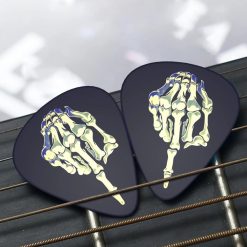
Pack of 12 Skeleton Middle Finger Guitar Picks ‘Final Chord’
19,90€ This product has multiple variants. The options may be chosen on the product page -
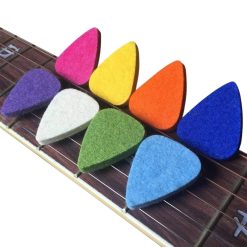
Set of 8 Soft Colored Felt Picks for Ukulele or Guitar
-
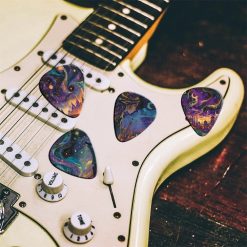
Guitar Picks – Psychedelic Theme:’Chromatic Reflections’ Set (10 or 20 pieces)
19,90€ This product has multiple variants. The options may be chosen on the product page -
Set of 12 Cosmic Picks ‘Stellar Journey’
19,90€ This product has multiple variants. The options may be chosen on the product page