12,90€
This product has multiple variants. The options may be chosen on the product page
All about guitar picks
The guitar pick, also known as a plectrum, is an essential accessory for many guitarists. There is a wide variety of picks, each offering a unique sound and feel. Whether you are a beginner looking to master the guitar method with a pick, or a professional looking to experiment with new sounds, understanding the role and use of a pick can greatly improve your playing.
What is a guitar pick?
A guitar pick is a small piece of plastic, wood, metal, or other materials, usually triangular in shape, used to pluck or strum the strings of a guitar. Picks vary in size, shape, thickness, and material, which affects the sound produced and the comfort of the player. The choice of pick largely depends on the style of music you play, the sound you want to achieve, and your personal pick playing technique.
Why use a guitar pick?
The use of a pick offers several advantages. First, it can produce a louder and clearer sound than playing with fingers, which is particularly useful for live performances. In addition, it allows for greater precision and speed, essential for playing fast guitar solos and complex riffs. A pick can also help protect your fingers from wear caused by repetitive friction against the strings.
History of the guitar pick
The history of the guitar and pick is long and complex. Picks have been used in music since ancient times, but their use with the guitar is a relatively recent development, first appearing in the 19th century.
Various Types of Guitar Picks and Their Uses
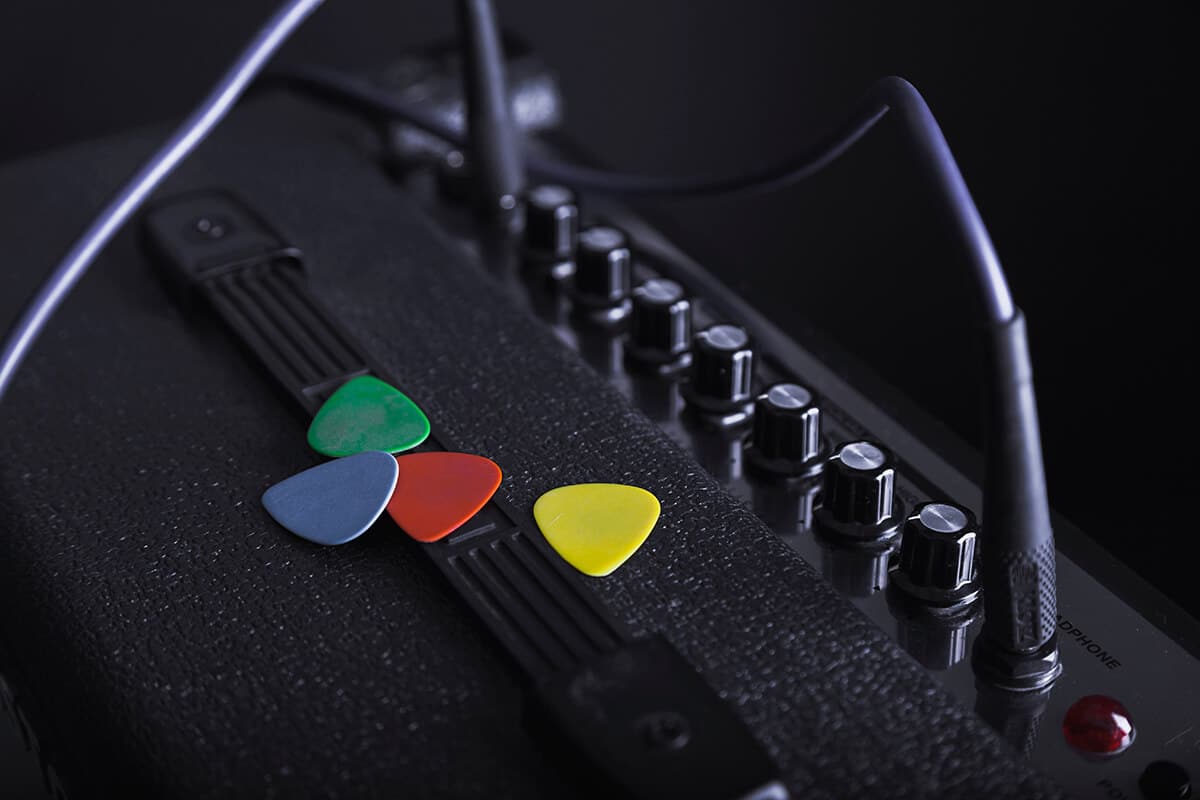
The world of guitar picks is vast and varied, offering guitarists a wide range of options to customize their sound and play. The choice of pick can influence not only the comfort and efficiency of your guitar method, but also the timbre and volume of your instrument. There are different types of picks, including plastic, wood, metal, and composite picks. Each type has its own sound and touch characteristics, which can greatly influence your guitar performance.
The materials of guitar picks and their effects on sound
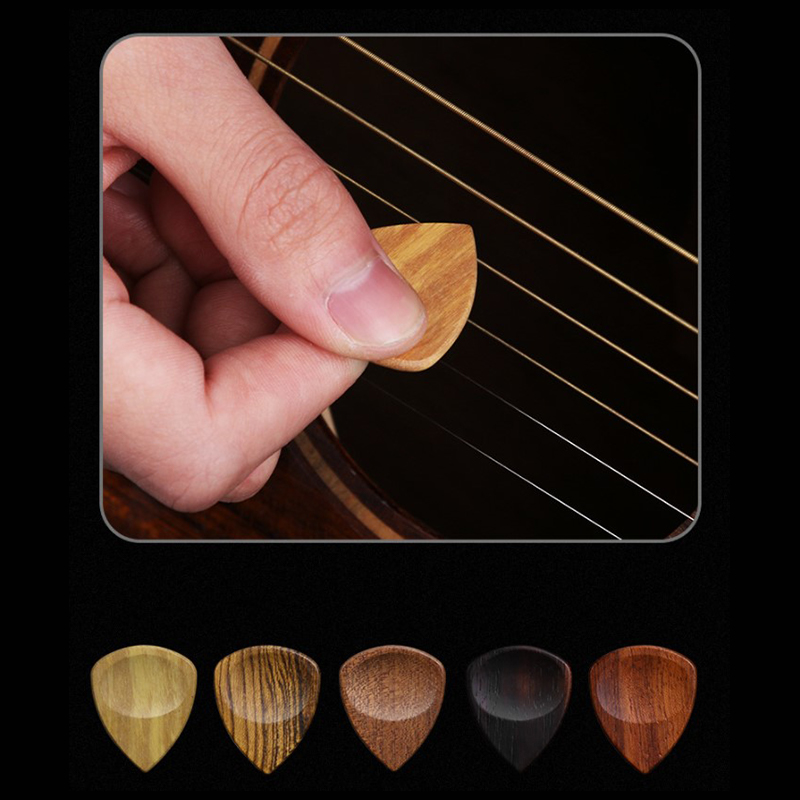
The material of your pick has a huge impact on the sound of your guitar. Plastic picks, for example, are very common and offer a soft and warm sound, ideal for jazz and folk music. Wooden picks, on the other hand, tend to give a clearer and brighter sound, which can be perfect for rock or blues. Metal picks produce a very distinctive sound, often used in hard rock and metal.
Guitar Pick Shapes and Sizes
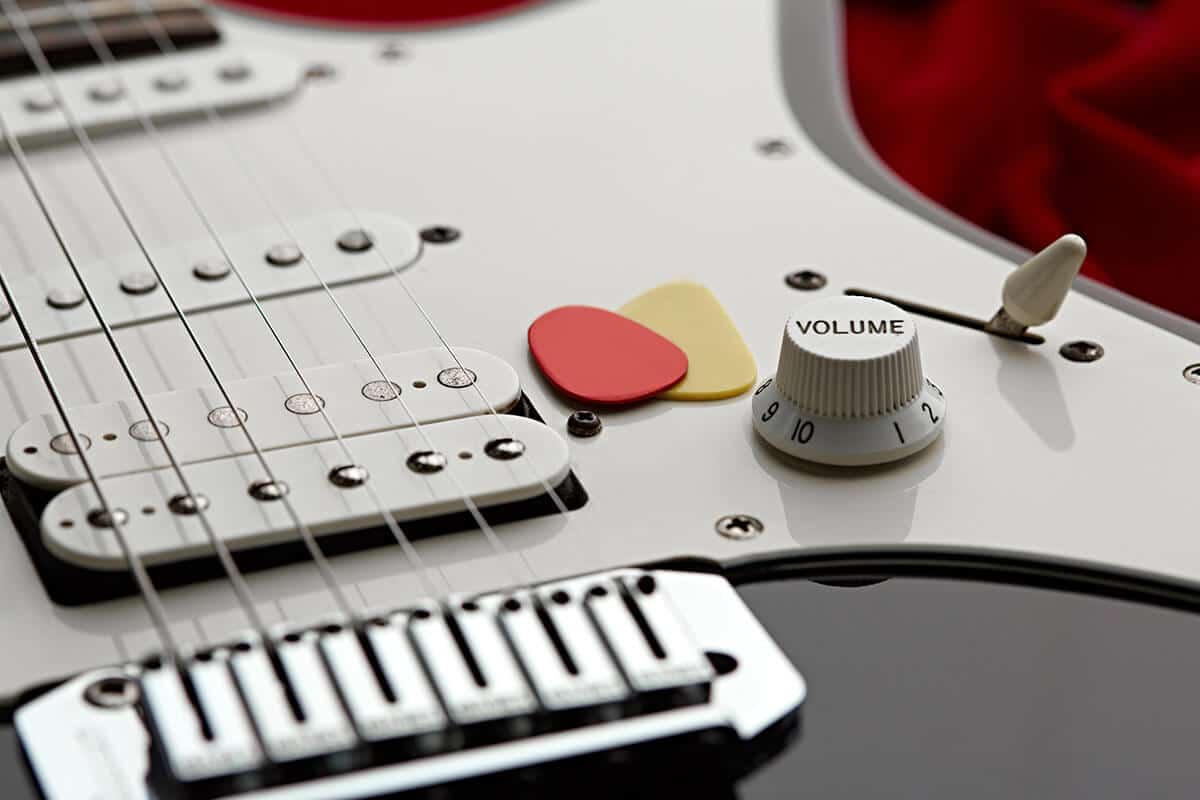
The size and shape of the pick also play a crucial role in how you play the guitar. Standard size picks are the most commonly used and are generally perfect for beginners. They are large enough to be easily held, but small enough to allow for precise accuracy and control. Larger and thicker picks may be more comfortable for some guitarists, while others will prefer smaller and thinner picks for their speed and lightness. The shape of the pick, whether it is rounded or pointed, also affects how it interacts with the strings and can influence the sound of your guitar.
Choosing the Right Pick for Your Music Style
Finally, the choice of pick largely depends on your style of music. A thicker and heavier pick may be ideal for rock or metal guitar riffs, while a lighter and more flexible pick is often preferred for folk or acoustic guitar strumming. Plastic picks are commonly used across all genres, while wooden or metal picks are often associated with specific styles. Ultimately, the choice of pick depends on your playing style, personal preferences, and the effect you want to achieve on the sound of your guitar.
Guitar Pick Playing Techniques
The guitar pick is an essential tool for all guitarists, whether you are a beginner or a professional. It can be made from various materials, such as plastic, wood, or metal, and comes in different shapes and sizes to suit your specific needs. Whether you play electric, acoustic, or classical guitar, using a pick can greatly enhance your performance.
How to hold a guitar pick?
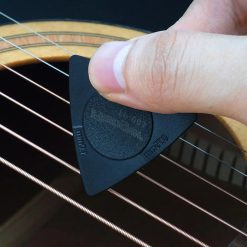
The first step to mastering the use of a guitar pick is knowing how to hold it correctly. To do this, use your thumb and index finger to hold the pick, leaving a small part protruding. Make sure to maintain a firm, but relaxed grip, to allow for greater flexibility and better control. Some picks even have a specific grip to help maintain a good hold.
Basic playing techniques with a pick
There are several basic techniques for playing with a pick. One of the most common is the back-and-forth movement, or “alternate picking”, which involves alternating down and up strokes on the strings. Another important technique is “sweep picking”, which involves sweeping the strings in a fluid motion. The thickness of the pick can also affect the sound produced, with thicker picks generally producing a louder and denser sound.
Advanced pick playing techniques
Once you have mastered the basic techniques, you can start exploring more advanced techniques. For example, “speed picking” is a technique that requires a lot of practice and allows for very high playing speeds.Similarly, “tapping” is a technique that involves using the hand that holds the pick to produce additional notes. Finally, some guitarists use their pick creatively, by turning it or moving it to achieve unique sound effects.
Subscribe to Our Newsletter and Get 5% Off Your First Order!*
* Excludes ongoing sales.
By signing up, you will receive your 5% discount code by email. You can unsubscribe at any time. See our privacy and cookie policy for more information.